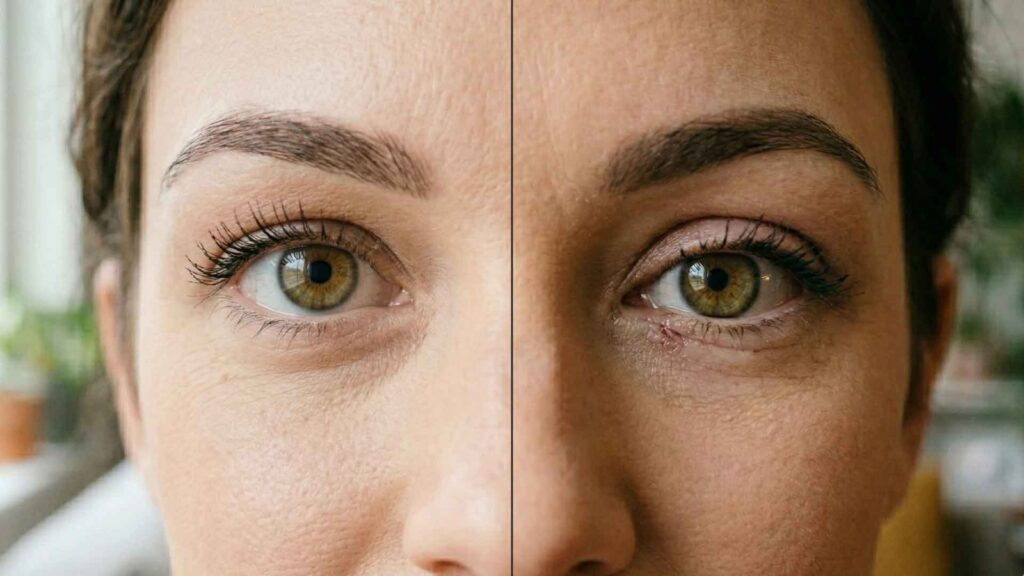
Hooded eyes are a common anatomical concern characterized by excess skin and soft tissue that fold over the upper eyelid, often reducing the visible eyelid platform and, in some cases, impairing vision. While frequently perceived as a cosmetic issue, hooded eyes can also reflect underlying structural changes in the brow and forehead region. A brow lift is a surgical procedure designed to address these anatomical factors by repositioning the brow and improving the contour of the upper eyelid area.
Understanding the relationship between hooded eyes and brow position is essential when evaluating treatment options. In many cases, the primary contributor is not the eyelid itself, but descent of the brow and forehead tissues. A comprehensive assessment allows for precise correction that restores both function and anatomical balance.
What Causes Hooded Eyes?
Hooded eyes develop due to a combination of genetic predisposition, aging, and structural changes in the periorbital region. The upper eyelid and brow function as a unified anatomical unit, and alterations in one component often affect the other.
The most common causes include:
- Brow ptosis: Downward displacement of the eyebrow, which pushes excess tissue over the upper eyelid
- Dermatochalasis: Redundant upper eyelid skin resulting from loss of elasticity
- Fat redistribution: Changes in orbital fat compartments that contribute to fullness or heaviness
- Loss of collagen and elastin: Age-related tissue laxity affecting skin and connective structures
- Genetic anatomy: Naturally low brow position or heavier upper eyelid tissues
Identifying the dominant cause is critical, as treatment strategies differ depending on whether the issue originates from the brow, eyelid, or both.
Why a Brow Lift Is Often the Correct Approach
Many patients assume that upper eyelid surgery alone will correct hooded eyes. However, when brow descent is the primary factor, isolated eyelid procedures may not fully address the problem and can even lead to suboptimal outcomes.
A brow lift targets the root cause by elevating the brow to its anatomically appropriate position. This repositioning reduces the downward pressure on the upper eyelid, restoring a more defined eyelid contour and improving visual field when obstruction is present.
From a medical perspective, correcting brow ptosis can also reduce compensatory muscle activity in the forehead, which often develops as patients subconsciously elevate their brows to improve vision.
Types of Brow Lift Techniques
Several surgical techniques are available to address hooded eyes through brow elevation. The choice depends on individual anatomy, degree of tissue descent, and desired outcome.
Endoscopic Brow Lift
This minimally invasive approach uses small incisions behind the hairline and specialized instruments to reposition the brow. It allows for precise elevation with reduced tissue disruption and typically results in less postoperative swelling.
Temporal (Lateral) Brow Lift
Focused on the outer portion of the brow, this technique is particularly effective for patients with lateral hooding. It improves the contour of the outer eyelid without significantly altering the central brow position.
Coronal Brow Lift
In cases of significant brow ptosis, a more extensive approach may be used. This involves a longer incision across the scalp to allow for comprehensive repositioning of the forehead and brow tissues.
Each technique is selected based on anatomical findings rather than a one-size-fits-all approach.
Functional Benefits of Brow Lift for Hooded Eyes
While aesthetic improvement is often a motivating factor, brow lift surgery provides measurable functional benefits in patients with hooded eyes caused by brow descent.
- Expansion of the superior visual field
- Reduction in eyelid heaviness
- Decreased reliance on forehead muscle compensation
- Improved symmetry of brow position
These outcomes contribute to both visual clarity and muscular efficiency, particularly in patients with moderate to severe brow ptosis.
Anatomical Precision in Brow Lift Surgery
The success of a brow lift depends on precise understanding of facial anatomy, including the relationship between the frontalis muscle, orbital rim, and soft tissue layers. Overcorrection or improper vector of lift can result in unnatural appearance or functional imbalance.
Modern techniques emphasize:
- Preservation of nerve integrity, particularly the supraorbital and supratrochlear nerves
- Controlled elevation to maintain natural brow curvature
- Strategic fixation to ensure long-term stability
These principles are essential to achieving outcomes that are both anatomically sound and visually harmonious.
Brow Lift vs. Upper Blepharoplasty
Differentiating between brow lift and upper eyelid surgery (blepharoplasty) is a key aspect of treatment planning for hooded eyes. While both procedures can improve the appearance of the upper eyelid, they address different anatomical structures.
- Brow lift: Elevates the brow and reduces tissue descent from above
- Blepharoplasty: Removes excess skin and fat from the eyelid itself
In some cases, a combined approach may be recommended to address both brow position and eyelid redundancy. However, treating the brow as the primary source of hooding often yields more comprehensive and lasting results.
Recovery and Healing Process
Recovery following brow lift surgery typically involves an initial period of swelling and mild discomfort, which gradually improves over the first two weeks. Most patients can resume normal daily activities within this timeframe, although strenuous activity should be avoided for several weeks.
Key aspects of postoperative care include:
- Keeping the head elevated to minimize swelling
- Avoiding pressure on the forehead and brow area
- Following incision care instructions to support healing
- Attending follow-up visits for monitoring progress
Final results continue to refine over several months as tissues settle into their new position.
Risks and Clinical Considerations
As with any surgical procedure, brow lift surgery carries potential risks. These may include:
- Temporary or prolonged numbness in the forehead
- Asymmetry in brow position
- Hairline changes depending on technique
- Infection or delayed healing
Careful surgical planning and adherence to postoperative guidelines significantly reduce the likelihood of complications.
Who Is a Candidate for Brow Lift Surgery?
Candidates for brow lift surgery typically include individuals with:
- Visible hooding of the upper eyelids due to brow descent
- Low or asymmetrical brow position
- Functional visual obstruction in the upper field
- Good overall health and stable expectations
A detailed consultation is essential to evaluate facial anatomy and determine whether a brow lift, blepharoplasty, or combined approach is most appropriate.
Long-Term Outcomes and Stability
Brow lift surgery provides long-lasting structural improvement by repositioning tissues rather than temporarily tightening the skin. While aging continues, the anatomical correction achieved during surgery remains stable over time.
Factors that influence longevity include skin quality, lifestyle habits, and adherence to postoperative care recommendations.
Clinical Evaluation: A Critical First Step
Accurate diagnosis is the foundation of effective treatment for hooded eyes. A comprehensive clinical evaluation assesses brow position, eyelid anatomy, muscle function, and skin quality.
This process ensures that the chosen intervention targets the true anatomical cause rather than only addressing surface-level symptoms.
Schedule a Consultation for Hooded Eyes Correction
Hooded eyes can result from complex interactions between the brow and eyelid structures. A brow lift offers a medically sound solution when brow descent is the primary contributing factor, improving both function and anatomical alignment.
If you are experiencing reduced eyelid visibility, heaviness in the upper eye area, or suspect brow descent is contributing to your concerns, a professional evaluation is the next step. A consultation provides detailed insight into your anatomy and helps determine the most appropriate surgical approach.
Schedule a consultation through the website to explore whether a brow lift is the right option for addressing hooded eyes with precision and long-term effectiveness.